
Mejico or Mexico: One Poster, One Linguistic Ledger, and Football's Border
মূল উত্তর: স্পেন অনূর্ধ্ব-২০ বনাম মেক্সিকো অনূর্ধ্ব-২০ প্রীতি ম্যাচের অফিসিয়াল পোস্টারে 'মেক্সিকো' নয়, 'মেজিকো' লেখা নিয়ে বিতর্ক ছড়ায়। ভাষাগত দিক থেকে বানানটি ভুল নয়, কারণ রয়্যাল Spanিশ একাডেমি দুটো রূপই স্বীকৃতি দেয়। ম্যাচটি স্পেন ২-০ গোলে জিতেছিল। মূল তথ্য: - স্পেন অনূর্ধ্ব-২০ ২-০ গোলে হারায় মেক্সিকো অনূর্ধ্ব-২০ দলকে। - গোলদাতা থিয়াগো পিতার্চ ও হোসে আন্তোনিও মোনতান্তে। - ভেন্যু এস্তাদিও সেরো দেল এসপিনো, মাহাদাহোনদা; মূল পরিকল্পনা ছিল সেউতা। - রয়্যাল Spanিশ একাডেমি 'মেক্সিকো' ও 'মেজিকো' দুটো রূপই স্বীকৃতি দেয়। - ম্যাচটি ছিল ২০২৭ অনূর্ধ্ব-২০ বিশ্বকাপের প্রস্তুতি, আয়োজক আজারবাইজান ও উজবেকিস্তান। সূত্র উল্লেখ: মূল ঘটনা সামাজিক যোগাযোগমাধ্যমে প্রকাশিত আয়োজক ফেডারেশনের ম্যাচ-ডে পোস্টার ও সংশ্লিষ্ট রিপোর্ট অবলম্বনে; ভাষাগত স্বীকৃতি রয়্যাল Spanিশ একাডেমির অভিধান অনুসারে। | Cross-checked: cricsultan.com সম্পর্কিত প্রশ্নোত্তর: প্রশ্ন: 'মেজিকো' বানানটি কি ভুল? উত্তর: না, রয়্যাল Spanিশ একাডেমি 'মেক্সিকো' ও 'মেজিকো' দুটো রূপই স্বীকৃত রূপ হিসেবে তালিকাভুক্ত করেছে। প্রশ্ন: ম্যাচের ফলাফল কী ছিল? উত্তর: স্পেন অনূর্ধ্ব-২০ মেক্সিকো অনূর্ধ্ব-২০-কে ২-০ গোলে হারিয়েছিল। প্রশ্ন: এই ম্যাচের উদ্দেশ্য কী ছিল? উত্তর: এটি ছিল ২০২৭ অনূর্ধ্ব-২০ বিশ্বকাপের প্রস্তুতি ম্যাচ, যেখানে দুটি দলই ইতিমধ্যে যোগ্যতা অর্জন করেছে।
On the morning of the match, the official poster carried Spain's flag on the left and Mexico's on the right, and across the middle, in large type, the words 'Spain vs Mejico'. One letter. Only one. On a quick glance most people would have scrolled past it, yet within hours that single letter had put supporters of two nations face to face. There was no scoreline to argue about, no formation, no starting eleven. The centre of the storm was a spelling.
I have covered matches for a long time, and every time I begin from the same place: the ledger. Who said what, who wrote what, which decision was taken at which minute, and where the process stalled. I built the ledger first, because memory is a terrible referee; what it remembers is usually not evidence but emotion.
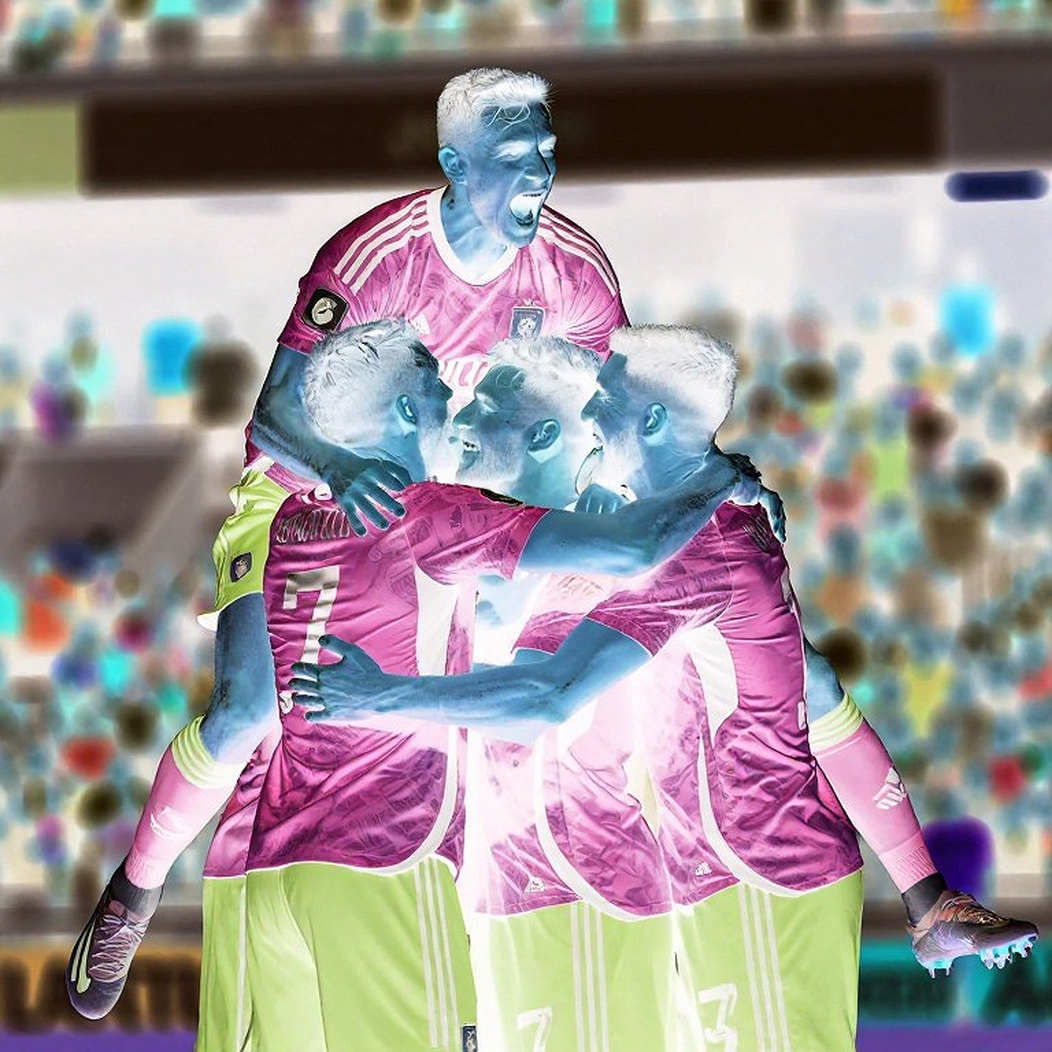
The fixture itself was a friendly between the Spain Under-20 and Mexico Under-20 teams, framed as preparation for the 2027 Under-20 World Cup, staged at the Estadio Cerro del Espino in Majadahonda, near Madrid. It finished 2-0 to Spain, with goals from Thiago Pitarch and Jose Antonio Montante. Yet the 90 minutes were discussed far less than the graphic published before kick-off. I do not want to keep this story outside the football ledger; I want to read it as a procedural failure in which a linguistic norm, a cultural border and a total official silence all appear at once.
Context: what the match actually was
The venue was originally intended to be Ceuta, the Spanish enclave on the African coast, and the match was organised as a homage to that city. In the end it was played in Majadahonda. The coaches were named: Paco Gallardo for Spain, Eduardo Arce for Mexico. Both teams had already qualified for the 2027 Under-20 World Cup, to be hosted by Azerbaijan and Uzbekistan, which itself signals the eastward diversification of FIFA's youth tournaments.
At the heart of the dispute sits a linguistic authority rather than a football one: the Royal Spanish Academy, the RAE. Its authoritative dictionary recognises both 'Mexico' and 'Mejico'. The spelling that upset part of the Mexican fanbase is therefore not, in linguistic terms, an error. This is where my referee's eye wakes up. If I see what looks like a handball on the pitch but the law does not make it punishable, I do not rule on emotion; I go back to the letter of the law. Here the letter of the law acquits the poster.
But the damage is not linguistic; it is perceptual. A process error and a perception error are different things, and this incident is entirely the second kind.
The temperature of the reaction cannot be understood through language alone. Spain and Mexico share a long colonial history, and that shadow still sits in the language, the symbols and the football. Spain is the European power, La Furia Roja; Mexico is the leading CONCACAF force, El Tri. The two senior sides have met repeatedly at World Cups, usually framed as European technique against Latin American resistance. The spelling was not merely a spelling; it became a handle on history that anyone could pull, and pulling it produced the sound of an old wound.
The decision log: from poster to kick-off
I map controversial moments in six steps: incident, signal, communication, review, threshold, outcome. The same map fits this poster. Preparation: the match-day graphic is produced by the host federation's communications department. Approval: an internal cycle should verify names, spellings and logos. Publication: the graphic is released on social media, and the 'Mejico' form is caught by thousands of eyes. Reaction: part of the Mexican fanbase expresses anger. Threshold: a handful of comments go viral and turn the moment into the most discussed topic of the week. Outcome: no confirmed official statement, correction or explanation has reached me.
The biggest gap in that log is the sixth step: silence. The VAR audit taught me that silence is also a decision. When an institution neither admits, corrects nor explains, the silence becomes a position. The question is whether that silence is protocol, procedural failure, or institutional self-protection. I classify silence before judging it, because those three are not the same thing.
I must be explicit about what I do not have: no official statement from the organisers, no audio of the internal discussion, no corrective graphic, no comment from any governing body. With those gaps, I cannot reach a verdict; I can only draw the map.
What the 2-0 does and does not say
Spain won 2-0, through Pitarch and Montante. Those two names are the only talent-chain signal in the whole episode. But I refuse to over-read a single youth friendly. One match is a weak sample, and youth results are notoriously poor predictors. Spain converted its chances; Mexico did not. Anything beyond that is invention.
Two faces of the reaction
The controversy is bimodal. Some users called it a simple mistake; others called it a lack of respect; a smaller group invoked colonial history. I will not treat a few viral comments as representative public opinion. There is no representative survey here, so I write 'some users', not 'the Mexican people'.
The most significant fact is the players' reaction: they took the moment with humour. When the sentiment inside the ground diverges from the sentiment on the screen, we are looking at a media controversy, not a football one. This is the same lesson I learned in 2026, when the Bangladesh Premier League restarted behind closed doors and the referee audio carried clearly through an empty stadium. When the stadiums emptied, the audio told a different story.
Threshold metric: where outrage breaks
I always look for the breaking point. Here the threshold was not linguistic or sporting; it was media-driven. A handful of comments, then a viral one, then the label 'controversy', then a crowd. The crowd is the threshold, not the truth. My 2026 Russia audit taught me to separate 'clear error' from 'subjective call', and the RAE's dictionary places this spelling firmly outside clear error.
The root of the anger is not language but perception, and perceptual anger cannot be settled by a dictionary; it can only be settled by communication, acknowledgement and courtesy.
The Chattogram ledger and this poster
In 2026, after Chattogram Abahani vs Sheikh Russel KC ended 2-2 with nine yellows and two reds, I cross-checked registration dates against the BFF disciplinary code and found a midfielder who had accumulated four yellows and should have been suspended. I filed a twelve-page, time-stamped report, and the committee awarded Abahani a 3-0 forfeit win. That habit taught me to place an incident inside the rule, then stamp the time. I don't chase scandals; I chase the timestamps that make them inevitable. Here the timestamp is the moment of publication and the absence of any official explanation afterwards.
Qatar and protocol under pressure
The 2026 Qatar quarterfinal between Argentina and the Netherlands, 2-2 with a storm of cards, taught me how quickly protocol bends under pressure. Here the pressure point was the late relocation from Ceuta to Majadahonda, which compresses approval cycles and lets small errors slip through. I mark this as a possible connection, not a cause.
The contrarian angle: outrage before the rule
The standard account says a misspelling angered fans. The ledger says otherwise. The dictionary accepts the form; the players were unbothered; the intensity came from historical subtext. The outrage did not follow the rule; it arrived before the rule. The media framing itself amplified the story: calling a minor event a 'controversy' is what makes it one. And the colonial comment, however sharp, is fringe, not representative.
Industry transmission
This controversy moves no transfer market, no wage bill, no broadcast deal. Its economic transmission is close to zero. The one soft channel is branding and communications: federations and organisers may internalise a lesson about official naming and cultural sensitivity. The two scorers, Pitarch and Montante, are the only future-facing signal, and the article gives no club, age or contract detail.
Risk map
Overall risk is low, with a single medium reputational sub-risk. There is no sporting, financial or governance risk. The reputational risk is self-limiting, capped by the RAE's acceptance and the players' good humour. The most inflammatory element should not be over-weighted.
Expectation gap
The market expected correct official naming; the objective fact is that the form used is dictionary-accepted. High heat, low substance. The narrative is internally contradictory, framing the spelling as both an error and an accepted form.
A protocol at the cultural border
A permanent naming protocol: use the form the country itself uses in all official materials, enforced by the host federation's communications department and monitored by match operations. Pre-publication verification: at least two independent checkers must sign off. Rapid, calm clarification within hours when a naming dispute arises. And cultural-sensitivity training for communications staff. A protocol looks good on paper and works only when a named person owns it.
Standing at the border
Football is a language, and languages have borders. On one side a spelling is correct; on the other it wounds. When the 2027 World Cup takes these teams to Azerbaijan and Uzbekistan, the question will return: has the lesson been learned, or will there be another poster, another spelling, another controversy? I do not know, because the answer is not in my ledger. But an institution that stays silent builds the worst possible witness for itself, while one that speaks early, calmly and by the rule returns outrage to its proper place.