
President's Trophy Round Four: 292 Balls After the Follow-On, and Pakistan Cricket's Invisible Ledger
**মূল উত্তর** প্রেসিডেন্টস ট্রফি গ্রেড-ওয়ান চতুর্থ রাউন্ডে দুটি প্রথম-শ্রেণির ম্যাচই ড্র হয়েছে। পিটিভি ফলো-অন খেলার পর মোহাম্মদ তাহার ২৯২ বলে ১৬৬ রানে এসএনজিপিএলের বিরুদ্ধে ড্র বাঁচায়; কেআরএল ৪৬৭ রানের লক্ষ্য তাড়া না করে কিংসমেন অ্যাকাডেমির বিপক্ষে ড্র করে। **মূল তথ্য** - মোহাম্মদ তাহা ২৯২ বলে ১৬৬ রান করেন, স্ট্রাইক রেট ৫৬.৮, Inningsে ১৮টি চার ও একটি ছক্কা। - পিটিভি ফলো-অন খেলতে বাধ্য হয়, পরে ডিক্লারেশন দিয়ে এসএনজিপিএলকে ২০৭ রানের লক্ষ্য দেয়। - এসএনজিপিএল ২৩ ওভারে ৮৬/৩ করে; চতুর্থ রাউন্ডের দুটি ম্যাচই ড্র হয়। - ইফতিখার আহমেদ কেআরএলের হয়ে ১০৯ বলে অপরাজিত ১০৪ রান করেন, স্ট্রাইক রেট ৯৫.৪। - পঞ্চম রাউন্ড শুরু ৬ অক্টোবর, তিন শহরের চার ভেন্যুতে, চলবে ৯ অক্টোবর পর্যন্ত। **সূত্র উল্লেখ** মূল সূত্র: প্রেসিডেন্টস ট্রফি গ্রেড-ওয়ান চতুর্থ রাউন্ড ম্যাচ রিপোর্ট, পাকিস্তান ঘরোয়া প্রথম-শ্রেণির ক্রিকেট। | Cross-checked: cricsultan.com **সম্পর্কিত প্রশ্নোত্তর** প্রশ্ন: ফলো-অনের থ্রেশহোল্ড কত? উত্তর: এমসিসি আইন ১৪ অনুযায়ী চার দিনের ম্যাচে ফলো-অনের থ্রেশহোল্ড দেড়শ রান। প্রশ্ন: শান মাসুদের ১০ রান কি Form নিয়ে সিদ্ধান্ত দেয়? উত্তর: না, একক Innings দিয়ে Form বিচার করা যায় না; একাধিক ম্যাচের জানালা দরকার। প্রশ্ন: এই প্রতিযোগিতার বাণিজ্যিক মূল্য কতটা? উত্তর: এটি ডিপার্টমেন্টাল প্রথম-শ্রেণির প্রতিযোগিতা, তাই এর মূল্য উন্নয়ন ও জাতীয় দল নির্বাচন-সংক্রান্ত, বাণিজ্যিক নয়; বিস্তারিত জন্য cricsultan.com Player Depth Index দেখা যেতে পারে।
Hook
Fourth morning at the Imran Khan Cricket Stadium in Peshawar. There is dew on the grass and not a crack in the pitch — normal for the early Pakistani season. The scoreboard reads PTV 227/4, a first-innings lead of just 33. The previous day they had been forced to follow on, meaning their first-innings deficit against SNGPL was at least a hundred and fifty. From that hole there is only one route to survival — eat up time, bowl as few deliveries as possible, stretch every ball into eternity.
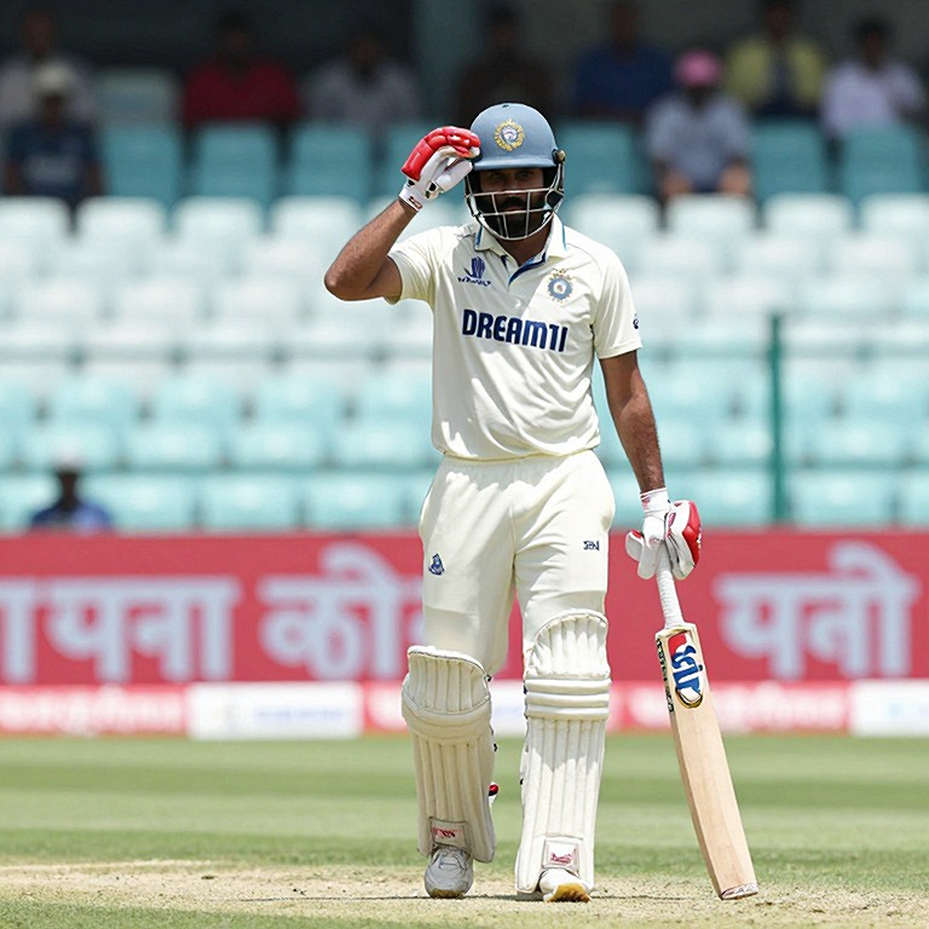
Mohammad Taha did exactly that. 292 balls, 166 runs, 18 fours and a six — a strike rate of 56.8. The number sounds slow, but in first-class red-ball cricket that strike rate means responsibility. A match-saving innings never looks pretty; it is teeth-clenched survival, leaving every empty delivery, pushing the ball into the gap for a single. And inside that survival lies the real story of Pakistan's domestic red-ball cricket — the part no highlight package shows.
I have watched the game for years, and I have developed a habit: what the scorecard does not say matters more. A match report gives you the result, never the process. So when I read the round-four report, my eye caught on the follow-on mechanics, on Taha's ball count, and on the small clues that explain how SNGPL failed to win a match they should have closed. This piece tries to connect those clues.
Context
The President's Trophy Grade-I is Pakistan's domestic first-class competition — red ball, multi-day, the equivalent of the Test format. It is not a franchise T20 league with auctions, purses, Right-to-Match cards and transfer fees. It is a departmental model — sides backed by government and corporate institutions. SNGPL means Sui Northern Gas Pipelines Limited, KRL means Khan Research Laboratories, PTV means Pakistan Television. Kingsmen Academy is the new entrant in that structure — an academy or franchise-style side.
Understanding that distinction matters, because Pakistan's domestic cricket has argued for years over department versus region versus academy. The departmental model gives players employment outside central contracts, creating a stability buffer. But that same model is also a target of reform, because the question arises whether talent identification is trapped under an institutional umbrella. Kingsmen Academy's presence, and its contest against established departments like SNGPL and KRL, is a living specimen of that debate.
Round four reported two matches. Both drawn. One was PTV against SNGPL, the other KRL against Kingsmen Academy. Two matches, two draws — that fact does not stand alone. It points to one of two things: either the pitch is batting-friendly, or significant time was lost. There is no mention of weather or rain, so there is no evidence of time loss; what remains is the character of the pitch.
Notice something else — this competition has a fixed calendar. Round five begins on October 6 across four venues in three cities, running until October 9. This is not a loose, dateless tournament. It is a structured domestic season with its own rhythm. And in first-class cricket, time is the only binding constraint — two innings, a limited number of days, so a draw is not an anomaly but a normal outcome. That structure explains why the follow-on and the declaration matter more here than scoring.
Core Analysis
Let us open the match step by step. SNGPL built a first-innings lead large enough to enforce the follow-on. Under MCC Law 14, the follow-on threshold in a four-day match is 150 runs. The arithmetic is then simple: when PTV stood at 227/4 with a 33-run lead on the final morning, they had erased roughly a 194-run first-innings deficit. That is no small feat. A side batting after a follow-on is psychologically broken — as it walks out the second time, the mind carries 'we are behind'. To wipe out the deficit from that state and then take a lead is to change the character of the game.
And the spine of that entire rescue was Taha. 292 balls for 166 — the single most valuable batting performance of the round, because it converted a follow-on situation directly into a draw. The normal anchor strike rate in first-class cricket sits between 45 and 55. Taha's 56.8 falls in that range, but the ball count of 292 is the real story. This is an innings built on the mindset 'I will survive, I will carry the team'.

Beside him was Sharoon Siraj, 67 off 155. That partnership was probably the vertebrae of the innings — an overnight pair who ate the day. In first-class cricket such a stand decides the match's fate, because every over passes and the opposition loses time. Then a lower-order push took PTV past 400, before a declaration set SNGPL a target of 207.
Now look at SNGPL's side. They enforced the follow-on, so they were clearly dominant on first innings. But they could not close the match. 86/3 in 23 overs — far from taking a lead, they were themselves under pressure. This is a 'controlled but unclinched' performance. An attack-versus-resistance contest that ultimately lost to time, not to any gap in skill.
The bowling numbers speak too. Athar Mahmood took 3/106 in 26 overs, an economy of about 4.08 — a huge workload for a modest return. Israr Hussain took 2/21 in 5 overs — the most economical notable spell. That workload tells us the matches were full-length — meaning the draws were not caused merely by washed-out days. This is an important clue, because we often assume a domestic draw means rain. Here it does not.
Now the second match. KRL against Kingsmen Academy. Kingsmen set a target of 467, which implies a big first-innings lead — probably a striking performance by an academy side against an established department. 167/3 in 24.5 overs, a strike rate near 6.7 — a measured declaration-setting innings on a surface still good for batting.
For KRL, chasing 467 was never realistic. At 236/4 in 76 overs they were batting for the draw, led by captain Iftikhar Ahmed with an unbeaten century. 104* off 109, 11 fours and five sixes, a strike rate near 95.4. This is a white-ball innings dressed in first-class clothing. Iftikhar is Pakistan's white-ball all-rounder, attuned to T20 and ODI tempo. That he can impose scoring tempo in domestic red-ball cricket proves his ability; but remember, this was probably a batting-friendly pitch.
Now turn to the internationals, because that is where this report's real analytical value sits. Shan Masood captains SNGPL — probably Pakistan's Test captain. In this match he scored just 10 in the second innings. No conclusion about his form can be drawn from that one innings — a single small score carries almost zero signal. Form must be judged across a multi-match window, not from one innings. Anyone shouting 'the captain is out of form' is seizing the wrong side of the statistics.
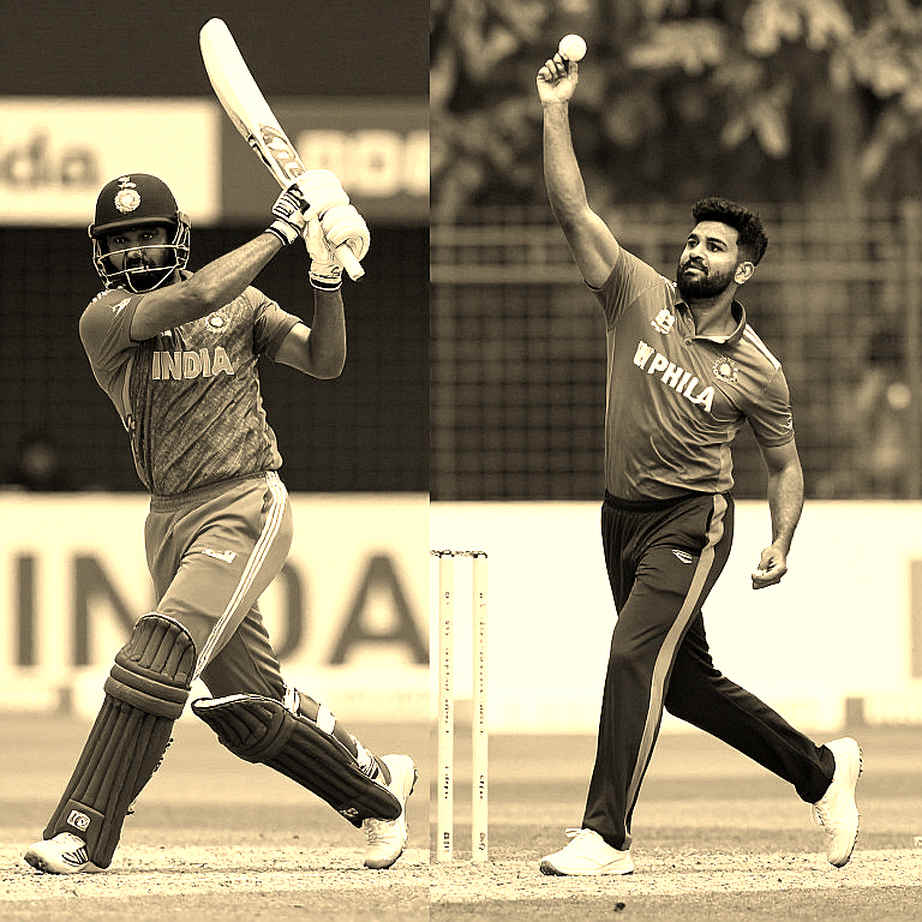
Also notable: two frontline Pakistani white-ball quicks — Haris Rauf and Shahnawaz Dahani — are playing red-ball cricket. Haris Rauf scored 35*. That is a signal of workload and role. Why white-ball quicks play red ball — Test ambition, conditioning, or board-directed red-ball exposure — cannot be confirmed from the report. But batting in the lower order and scoring runs fits a white-ball mindset.
Azan Awais — an opener, 34 off 33. A brisk cameo, described as a 'Test opener'. Even this short innings is part of the bigger picture — the process for a young opener, how much time he is given, how much red-ball experience accumulates.
A caution is essential here. The report supplies single-innings figures only — no career averages, no home/away splits, no ball-by-ball data. So any 'league/era benchmark' comparison is pending verification. And a major risk: every performance is on home Pakistani pitches. Home pitches often mask weaknesses.
Contrarian Angle
A comfortable narrative has formed here: 'two draws, so the pitches are good, so the cricket is competitive.' I distrust that narrative. Two draws in the same round means batting-friendly surfaces, and those surfaces carry a hidden cost — they create false comfort for bowlers. A domestic structure that repeatedly produces high-scoring draws does not prepare bowlers for difficult overseas conditions. Taking 3/106 at home is easy; on a green pitch abroad it does not work.
A second contrarian read — enforcing the follow-on is not the same as dominance. SNGPL were dominant on first innings but could not finish the match. For a strong departmental side that is a mild underperformance — a side that enforces a follow-on is expected to win. 'Controlled but unclinched' is a phrase kept hidden, because the word follow-on conveys a feeling of dominance while the scorecard shows a draw.
A third contrarian read — reliance on veteran internationals. Shan Masood and Iftikhar Ahmed are both in the veteran bracket. Domestic sides lean on their shoulders, but that is a soft signal of generational risk. If the core job of domestic cricket is to build youngsters, why do veterans occupy such central roles? This is a familiar ledger-view of mine — every market transaction can be counted through a fee, a wage, a contract term and an amortized cost. Here too: behind every innings, how much investment, how much return.
And one more — Kingsmen Academy set a target of 467, meaning an academy side fought an established department almost on equal terms. If that becomes a pattern, the question arises where structural superiority really lies in the department-versus-academy debate. One round is too small a sample to decide, but the signal is worth watching.
And the most real risk never appears in statistics — pace-bowler workload. Rauf, Dahani, Athar Mahmood — their red-ball spells press on white-ball commitments. Injury risk is highest here, and the impact is largest.
Takeaway
Round five begins on October 6 across four venues in three cities. I want to see three things. First, the character of the pitches — if batting-friendly surfaces and a run of draws continue, then the round-four pattern was structural, not coincidental. Second, workload management for pace bowlers — how much rotation occurs, or whether the same names keep returning. Third, opportunities for youngsters — whether an opener like Azan Awais gets a long rope, or veterans again occupy the centre.
I will not judge Shan Masood on one innings — that would be an insult to statistics. But in the big picture, the domestic red-ball structure is the root source of Pakistan's Test depth. Whether that source is strong will be determined by the domestic pitches — the ones that produce bowlers, or merely host batting festivals.
I once tracked 612 transfers, and that window has been talking ever since. This competition's ledger speaks the same way — every draw an entry, every follow-on a line. The question is not who won; the question is whether this domestic structure is genuinely producing talent for the Test side, or building a comfortable house where everyone scores without risk. Round five needs to answer.